Es mostren els missatges amb l'etiqueta de comentaris SPEAKING. Mostrar tots els missatges

TASK 1 - TRAVELLING

Planning the journey


You are about to begin your trip to London...

but before you go, you need to solve out certain questions such as:


1. YOUR FLIGHT

Find a cheap fare for any dates in September. Take note of the date and time of departure and arrival and flight number. The flight has to be for 4 adults. When you are booking the flight follow all the instructions until you are asked to provide your credit card number. DO NOT PROVIDE YOUR CREDIT CARD INFORMATION. (Ryanair may be a good option)

2. AT THE AIRPORT. ON BOARD. (Listening exercise)

Make sure you are familiar with some specific vocabulary and expressions used when travelling.

Listen to tracks 2, 5 and 6 and fill in the boarding pass information.

  1. Flight number:

  2. Destination:

  3. Boarding time:

  4. Seat number:


Track 2


Listen to track 5 now and complete the boarding information below:

  1. Flight number:

  2. Gate Number:

  3. Seat number:

  4. Boarding Time:

Track 5


Listen to the announcement in track 6. Alicia is now in the departure lounge. Make a list with the order of passengers, rows and gates.

Track 6


3. SAFETY INFORMATION (optional speaking activity)


Watch this video on safety information. Try to get the words and perform it.


4. AT IMMIGRATION (optional speaking activity)

Work in pairs. First provide answers for what you may hear at immigration control. Then check with the listening (track 16).

Track 16


Then adapt it to your plans and roleplay it: A (you're the immigration officer) and B (you're Allie.) Swap roles.

Good evening, ma'am

Where are you arriving from?

What's the purpose of your visit?

How long are you staying in the U.S.?

Where are you staying?

Do you know anybody here?

Is he a family or friend?

Do you have his phone number?

Is this your first visit to the US?

Enjoy your stay in San Francisco.


TASK 2 - BUS / TRAIN SHUTTLE TO LONDON

Arriving in London

From the airport to the city centre

1. THE AIRPORT

Your plane has just landed in London but there are
five major airports in London. Which are you in?


After you get off the plane you see three signs . Where do you go?


Now you need to find your bags and suitcases. Where do you go?

Baggage Reclaim


2. AIRPORT TRANSFER

To get to the centre of London from the airport is very easy. You can go by bus, train or taxi. Which is the best option? Arrange your transfer.


TASK 3 - YOUR HOTEL

BOOKING A HOTEL

Sleep like a log in...

1. ACCOMMODATION

You can find a hotel in London very easily through the internet. In Great Britain there are different kinds of accomodation:

Generally you'll find the most luxurious hotels around Mayfair and cheaper ones in Bayswater and Earl's Court - however both areas are very accessible.
A less expensive way of seeing London is to stay in one of the many
bed and breakfast guest houses, also known as B & B. The streets around Victoria and Paddington railway station are full of pleasant reasonable B & Bs.
Young travellers, however, often stay in cheap
backpackers or youth hostels.

Look for accommodation
within zones 1 and 2 of the underground. Take note of the best option according to its location, facilities and price.

Is it going to be half-board or just bed and breakfast? Decide which is better for you.


2. AT THE HOTEL RECEPTION. Checking into a hotel
(optional speaking activity)

You finally got to the hotel. It is time to check in! Decide with your partner who will be the receptionist at the hotel and who will play the part of the guest who is checking in or is enquiring about his reservation or any other doubts he has. Start by preparing your dialogues separately using the model provided in the video below and then practise. Perform it as you record your conversation.


3. BREAKFAST


You may prefer to grab a coffee at your hotel, but for something different head to one of London's many cafés, also known as greasy spoons, where a traditional English breakfast is just a few pounds. What do Londoners usually have for breakfast? Listen to the following podcast and find out.


What are the main ingredients in a full English breakfast? Talk about it in your oral presentation You can watch a video which contains all the information you need by just clicking on the following image:

TASK 6 - EATING OUT

1. EATING OUT

LONDON is full of fantastic restaurants serving food from all around the world. Soho and China Town are the places to go for variety. Some restaurants even allow you to take your own beer and wine which can be bought from off-licences (liquor stores) nearby, which makes eating-out there incredibly cheap!


But maybe the cheapest and most classical take-away British meal can be bought in chippies.


Although pubs serve traditional ales, modern beers and increasingly fantastic wine, they also may serve food, too - in fact, this is often the best way to try some of Britain's tastiest cuisine.

Yummy dishes!
Remember: although a service charge is often added to your bill, people in London generally leave a tip of 10%.


2. This is LONDON: 7 million people, 3 million commuters daily, 34.000 shops, 159 theatres, 5 premier football teams and... 5.700 PUBS!

LAST ORDERS!

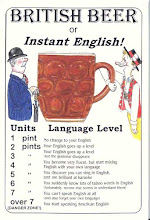
Just time for one last drink before saying good night! Head for the nearest pub for a pint of beer before the bar closes. It is not obligatory to tip in pubs because there's no waiter service: you have to go to the bar to buy your drinks.
Pubs are generally louder and more relaxed than bars, which tend to be smarter places to drink. A pub is a great place to watch live sport.

If you fancy something authentic, order a pint of ale!


Organize what, where and when you are going to have some of your meals.

Which are the typical English meals you are going to eat while visiting London? Also, look
for pubs or restaurants opening times.

(Optional Speaking Activity)

With a partner role play booking the table and ordering the meal at any restaurant or pub you've chosen. One of you is the customer and the other is the waiter. (You can use the teacher's menu leaflet)


Begin like this:


A: Good evening... , how can I help you?
B: Good evening, I would like to book a table for...